
Arab-Latin Center for Development Implements the Diploma in Training Latin American Preachers in Brazil, with 37 Participants from 11 Brazilian States and Two African Countries
Arab-Latin Center for Development Implements the Diploma in Training Latin American Preachers in Brazil, with 37 Participants from 11 Brazilian States and Two African Countries
Brazil | Institutional Report and First-Month Progress
The Arab-Latin Center for Development continues to implement its Diploma in Training Latin American Preachers in Brazil, an educational and da'wah training initiative aimed at developing qualified individuals capable of introducing Islam, communicating its teachings, and contributing to educational and religious activities within Portuguese- and Spanish-speaking communities.
The diploma runs for four and a half months, comprising 20 weeks divided into two academic terms. The program has enrolled 37 participants from various geographical locations. Thirty participants are based in Brazil, representing 11 Brazilian states, while six participants come from outside the country: five from Bissau, Guinea-Bissau, and one from Nampula, Mozambique. One additional registration does not specify a city of residence.
Overall, the participants represent 22 geographical locations, including 20 Brazilian cities and two cities outside Brazil. This geographical reach reflects the program's growing regional and international dimension and the interest in structured Islamic education and da'wah training beyond Brazil's borders.
Academic Structure and Curriculum
The diploma follows an intensive study schedule, with classes held three days a week: Mondays, Wednesdays, and Fridays. Students attend two lessons per day, each lasting one and a half hours, for a total of three hours daily and nine hours weekly.
The program comprises 180 theoretical study hours, distributed across six subjects per academic term, with 30 hours allocated to each subject. The academic schedule includes a revision week after every five weeks of study, as well as an additional revision week before the final examinations. Both are included in the total academic hours. Students take an examination in each subject at the end of every academic term.
The curriculum covers essential fields of Islamic knowledge, including Islamic Creed (Aqidah), Jurisprudence of Acts of Worship (Fiqh), the Qur'an and Tafsir, Hadith and Imam An-Nawawi's Forty Hadiths, Prophetic Biography (Seerah), Principles of Islamic Jurisprudence (Usul al-Fiqh), and preparation for da'wah.
The teaching team consists of Sheikh Abdussalam Almansori, Sheikh Abdulwahhab Habibullah, and Sheikh Abu Malik Abdullah, with subjects allocated according to the academic schedule of each term.
First-Month Progress and Development of Educational Materials
During the first month, the program made progress across its scheduled subjects, alongside the Center's ongoing efforts to develop educational resources and translate relevant Islamic reference works into Portuguese.
In Islamic Creed, students covered pages 1–55 of Al-Aqidah, Al-Ibadah wa As-Suluk, by Al-Nadwi. As the book is not yet available in Portuguese, the Center's Education Department is working on its translation.
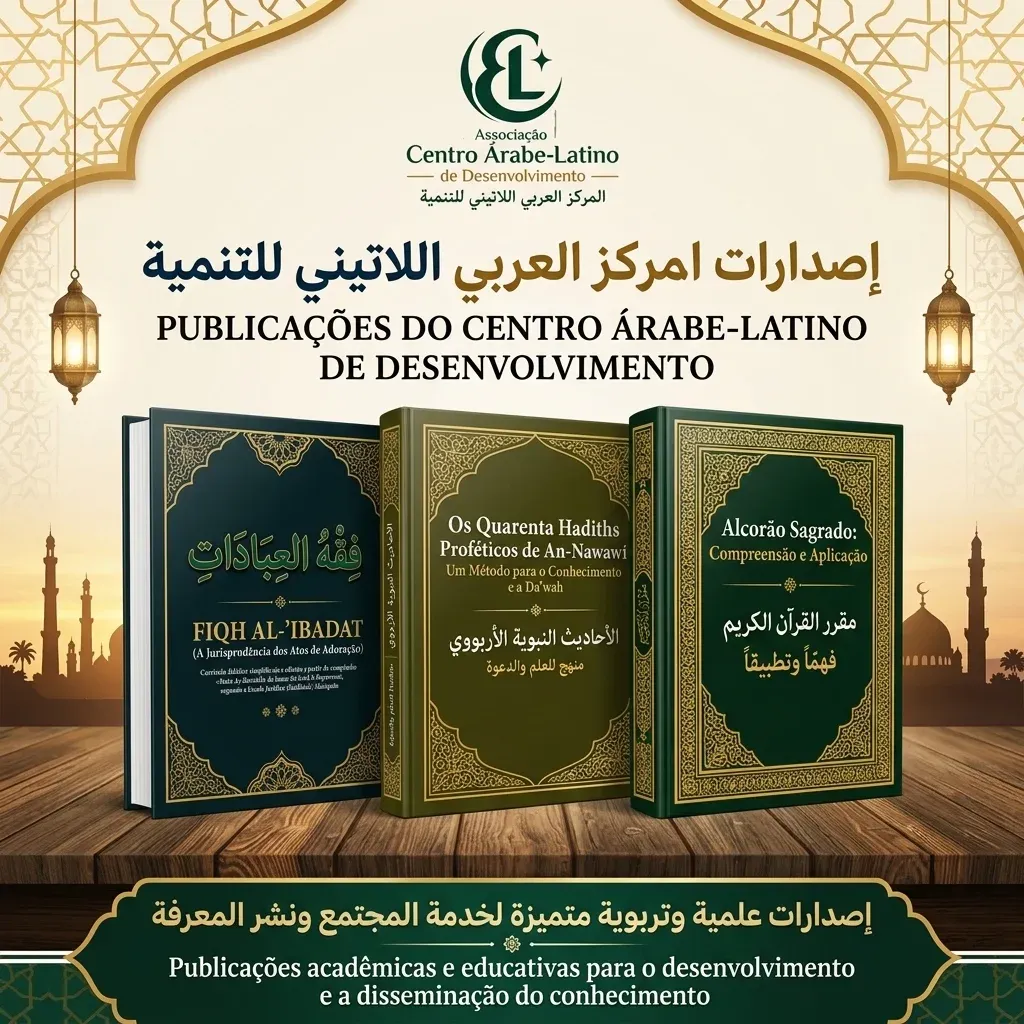
In Qur'an and Tafsir, the syllabus covered the study and memorization of Surahs Ad-Duha through Al-Alaq, in addition to Al-Fatiha, Al-Ikhlas, Al-Falaq, and An-Nas. To support this subject, the Center's Education Department published a dedicated textbook entitled The Noble Qur'an: Understanding and Application, covering the curriculum from Surah Ad-Duha through Surah An-Nas.
For Prophetic Biography, the program adopted Al-Yawm An-Nabawi, by At-Turairi, as its principal reference. Students have been progressing through the book while the Center works on its Portuguese translation.
In Jurisprudence of Acts of Worship (Fiqh), instruction is based on the classical text Ar-Risalah by Imam Ibn Abi Zayd Al-Qayrawani. The Center's Education Department has also produced a dedicated educational textbook based on this foundational work, presenting its subject matter in a structured and accessible manner.
In the study of Imam An-Nawawi's Forty Hadiths, students covered the first seven hadiths using the educational resource The Forty Hadiths: Understanding and Application, published by the Center.
In Principles of Islamic Jurisprudence (Usul al-Fiqh), the selected reference is Al-Waraqat by Imam Al-Juwayni. Alongside the study of its opening chapters, the Education Department is developing an explanatory educational textbook to facilitate students' understanding of this classical work.
Institutional Commitment to Educational Development and Da'wah Training
The Center's work through this diploma extends beyond delivering academic lessons. It also encompasses curriculum development, the production of supplementary educational materials, and the translation of classical Islamic references into Portuguese, helping provide resources suited to the linguistic and cultural context of Latin American communities.
The Diploma in Training Latin American Preachers is part of the educational and da'wah initiatives of the Arab-Latin Center for Development. It reflects the Center's commitment to building bridges of knowledge, communication, and cooperation between the Arab world and Latin America, while preparing qualified individuals to serve their communities and convey Islamic knowledge through a sound, responsible, and systematic approach.